
Read the ground around the river
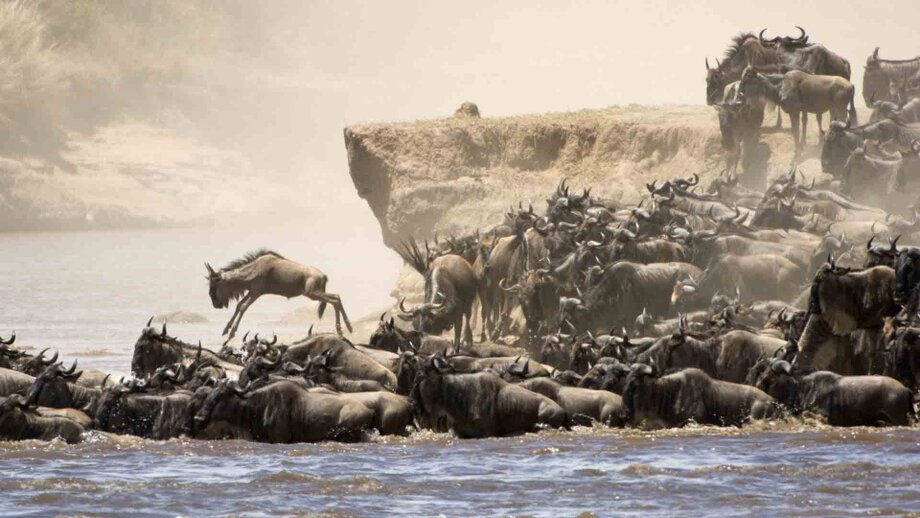
Look at the approach to the bank and the open ground behind the herd. Both help explain the animals’ movement and give you options for composing from a permitted viewing position.
Northern Tanzania · 26 September–7 October 2027
Join a 12-day Mara River crossing safari in Tanzania from 26 September to 7 October 2027. On this Great Migration photographic safari, Gabriel Haering leads four guests through Tarangire and Eastern Serengeti before two full days around the Mara River in Northern Serengeti. With two guests per dedicated photographic Land Cruiser, you have room to rest a long lens and keep a wider option within reach.
For other dates, please enquire about a bespoke safari.
Why this safari
The river stage of our Mara River crossing safari begins on 3 October with three nights at Gnu Mara River Camp. On 4 and 5 October, we can spend the whole day in the north. If we find a herd spread out across the grass, we have time to watch how it gathers and where it heads next. If animals approach the water, we can look at the bank and the herd together to decide what belongs in the frame.
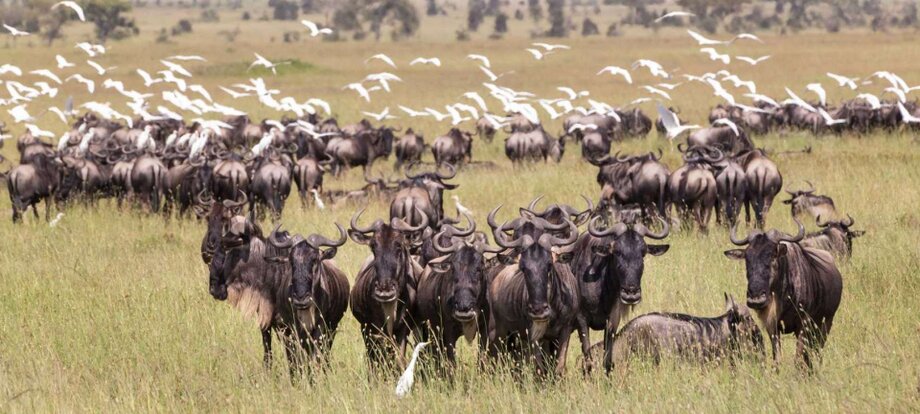
A line of wildebeest may approach the bank, hesitate and turn away. Another group may keep grazing nearby. Those pauses give you time to study the slope of the bank and watch where the animals look. You can frame the whole group or follow one animal as it moves, whether the herd enters the water or stays on the plain.
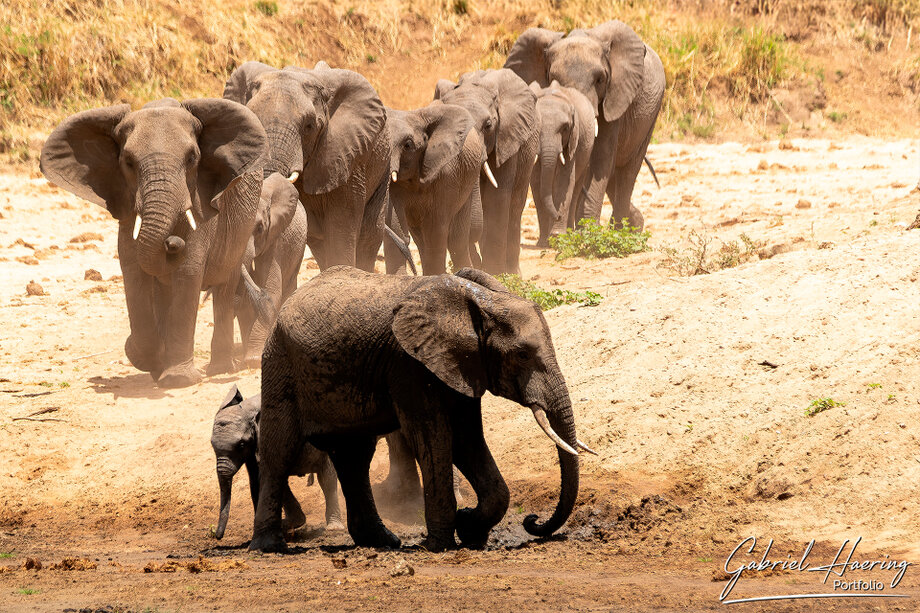
We use the earlier stops to practise skills that carry through to the river. In Tarangire, try keeping an elephant calf and the adults around it in the same frame as the group moves. On the Eastern Serengeti plains, watch how the gaps between animals change as they walk. The drive through Central Serengeti links those dedicated outings with our northern base. Stops during transfers depend on time and road conditions.
Our river outings take place in Northern Serengeti, Tanzania. References to herds returning from Kenya describe their movement within the wider Serengeti–Mara ecosystem. Airport transfers, accommodation and the safari route are all within Tanzania.
Seasonal context
The safari starts on 26 September, with the Northern Serengeti stay beginning a week later. By early October, some herds may remain around the river while others have moved south. We plan the outings around the animals we find and the grazing and river conditions at the time. A crossing remains a possibility throughout the visit, with its timing uncertain.
Look at the approach to the bank and the open ground behind the herd. Both help explain the animals’ movement and give you options for composing from a permitted viewing position.
A few animals stepping forward can draw your eye to a possible sequence. Follow them, keep the wider group in mind and leave space in the frame for a change of direction.
If dust rises behind moving animals, try framing it with the herd and horizon. In clear light, watch how the gaps between animals and their shadows give shape to a broad scene.
Route overview
Elephants and birds in a landscape shaped by river valleys and baobabs.
Open horizons, resident wildlife and opportunities to watch for predators.
Migration herds, riverbanks and the possibility of a crossing.
Continue by road from Northern Serengeti to Karatu before the departure airport transfer.
Tarangire National Park · Days 2–3
Two days in Tarangire give us time to explore the river valleys, baobab woodland and open savanna. By late September, scattered pools along the Tarangire River can draw elephants, buffalo and zebra during dry conditions. The river terraces offer views across the valley, while woodland tracks bring us closer to the trees and the wildlife feeding beneath them.
In Tarangire, choose a background before an approaching elephant reaches it. A baobab may provide a broad frame for the family, while a clearer patch of ground lets you concentrate on a calf beside an adult. Keep watching after the first photograph. The spacing between the animals can change as they feed or walk, creating a different picture from the same position.
Tarangire also offers varied bird photography. Look for lovebirds in the woodland, bee-eaters on exposed perches and Kori bustards or ostriches in open country. Where the route and conditions allow, the margins of Silale Swamp offer another setting for birds and mammals around water.
Eastern Serengeti · Days 5–7
After entering the Serengeti through Naabi Hill, we spend three days exploring the eastern plains. Broad grasslands and scattered granite outcrops, known as kopjes, give us room to photograph animals in their surroundings. Gazelles are worth watching for on the open plains, and the grassland is good terrain to scan for cheetahs. Lions may use the shade of rocks or trees.
Three days on the eastern plains let you work on a photographic idea more than once. Try using a kopje to anchor a wide view, then watch how an animal moves through the space around it. A resting cat may offer a portrait when it raises its head, or a wider image when another animal enters the scene. Keep a few frames that show the surroundings as well as the subject.
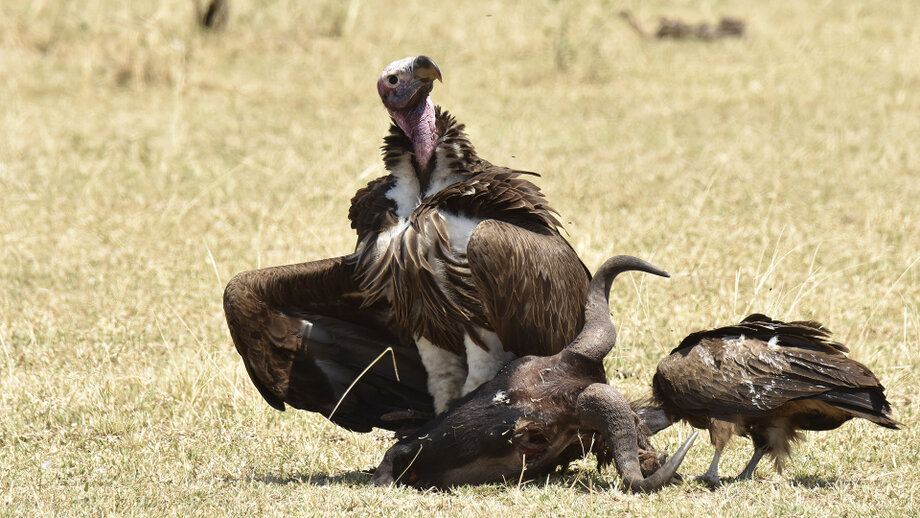
Bird photography on the plains asks you to judge distance as well as light. Look for secretarybirds and Kori bustards in open grassland, and raptors on isolated trees or rocks. If a distant bird appears soft through heat shimmer, choose a nearer subject or make a wider composition. Gabriel can help you distinguish an exposure or focus problem from the effect of the air between you and the bird.
Northern Serengeti and the Mara River · Days 8–10
Gnu Mara River Camp is our Northern Serengeti base for three nights on this Mara River crossing photographic safari. Following the arrival drive on 3 October, when time permits, we have two full outings on 4 and 5 October. We search the river corridor and nearby plains for wildebeest and zebra, deciding where to spend time according to visible herd movements. The position of the animals matters more to those decisions than a fixed crossing-point schedule.
While we wait at a permitted viewpoint, decide how much of the river to include. A tight frame may isolate the first animal approaching the water. A wider view can show the slope of the bank, the waiting herd and the distance ahead. Check your exposure and focus settings before movement begins, then follow the animals with room in the frame for their direction of travel.
On this Mara River crossing safari, a quiet bank can be a reason to turn our lenses towards the plains. Look for a line of wildebeest breaking into smaller groups, or for zebra still grazing as others move off. Back by the river, a fish eagle, hippos or a crocodile can provide a separate study of the river habitat. What we photograph depends on what we encounter.
Day by day
Airport pickup and drop-off are available at Kilimanjaro International Airport (JRO) or Arusha Airport (ARK). The standard itinerary travels by road. Driving times and wildlife stops depend on road conditions, park rules and time available.
Meet your guide at Kilimanjaro International Airport (JRO) or Arusha Airport (ARK) and transfer to Olerai Lodge. Settle in and join a short safari briefing before the overnight stay.
Leave Arusha for a full day of wildlife photography in Tarangire. Explore river habitats and baobab woodland, then continue to camp in the evening.
Return to productive areas and allow time for behaviour to develop. Choose between a full-day drive or separate morning and late-afternoon outings, depending on conditions.
Travel with a picnic lunch towards Serengeti National Park. Enter via the Naabi area and photograph along the way as driving time and conditions allow.
Explore the eastern plains with a picnic lunch. Look for resident wildlife and opportunities to photograph predators and landscapes before returning to camp.
Use the day to explore the open plains and work with changing light. The programme can follow a full-day drive or separate early and late outings.
Revisit promising areas or explore new ground as wildlife activity and light dictate.
Drive north via Central Serengeti with wildlife viewing along the way. Around Seronera, scan the grassland and rocky kopjes as the schedule allows. Explore Northern Serengeti in the afternoon if arrival time permits.
Spend a full safari day in the north, looking for migration herds around the river and on the surrounding plains.
Return to promising areas or follow new herd movements. Time at the river will depend on the animals, the conditions and what is visible from permitted positions.
Leave Gnu Mara River Camp and drive south through the Serengeti and the Ngorongoro Conservation Area to Bougainvillea Safari Lodge in Karatu. This is a long transfer day. Wildlife stops depend on driving time and conditions.
After breakfast and a safari debrief, transfer to Kilimanjaro International Airport (JRO) or Arusha Airport (ARK) according to your departure schedule.
After leaving Gnu Mara River Camp, overnight in the Seronera area of Central Serengeti on Day 11. On Day 12, fly from Seronera Airstrip (SEU) to Kilimanjaro International Airport (JRO). Enquire for a separate quote and confirmation of accommodation, flight availability, baggage allowance and onward connections.
8'490 USD per person based on four guests sharing two double rooms on the standard road itinerary.
Accommodation
The road itinerary begins with a night at Olerai Lodge in Arusha. We stay at Gnu Mara River Camp for three nights during the Northern Serengeti stage. After the long drive south on Day 11, Bougainvillea Safari Lodge in Karatu is our final stop before the airport transfer. The price is based on four guests sharing two double rooms. Your written quotation confirms each overnight stop.
Arusha · Arrival night

Tarangire

Naabi area

Eastern Serengeti
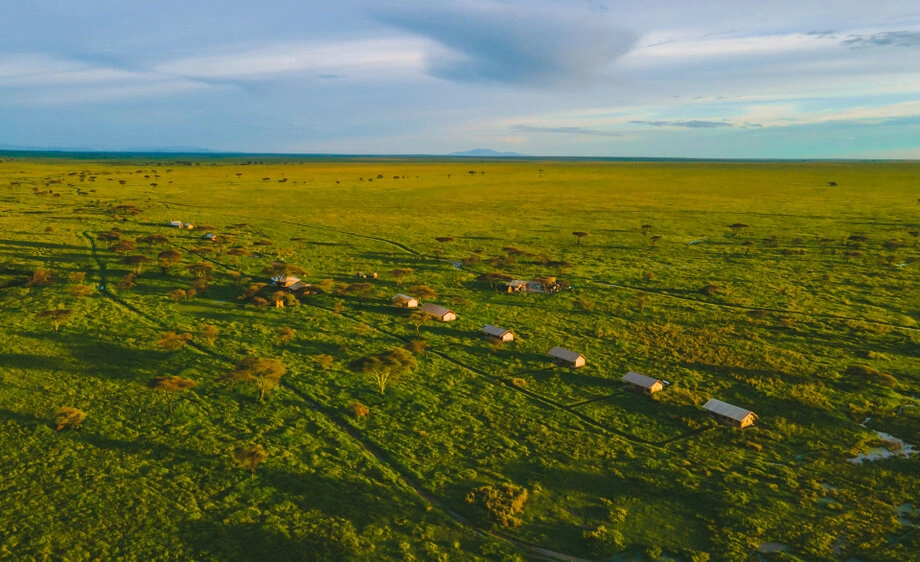
Northern Serengeti · Nights 8–10

Karatu · Night 11

Optional Seronera overnight: If you choose the flight to Kilimanjaro on Day 12, you spend Night 11 in the Seronera area instead of Karatu. Your quotation will name the camp or lodge.
Space to photograph
Four guests travel in two dedicated photographic Land Cruisers, with a window seat for each guest. You can rest a long lens on a bean bag while you watch the herd and keep a shorter lens close at hand. That makes it easier to switch from a detail at the bank to a wider frame when more animals move into view.


With two guests in each Land Cruiser, you have room to arrange your equipment before a sequence develops. Check that you can follow movement without catching a strap or camera bag. From the available viewing position, look for a clear line past branches and vehicle edges, then decide which part of the scene your lens will cover.
Each guest has a window seat and a bean bag to support a long lens. Rest the lens securely while waiting, keeping enough freedom to track a subject. Have a shorter zoom accessible for a broad view of the bank or herd. If you use two bodies, place them where you can reach either without moving equipment across the other guest’s position.
Northern Serengeti and the Mara River
On a Mara crossing photographic safari, your first frame can come before the herd reaches the water. Start with a wide view that shows the slope of the bank. Then pick out the first animals moving forward or the gap opening behind them. If the herd enters the water, your earlier frames show how it began. If the animals turn back, follow how the change spreads through the group.
During a crossing, keep watching where the animals enter and leave your frame. Hooves, spray and overlapping bodies can make a busy image, so look for a clear subject within it. Between bursts, check a small sample for sharpness and exposure. If the herd turns away from the water, follow that change and look at how it affects the group.

Photographic approach
Gabriel Haering leads the included photography workshops in English, Italian, French and German. Use a frame from the drive to ask a specific question. Did the autofocus move from the lead animal to the bank? Did a tighter crop lose the direction of travel? Pick one change to try on the next outing, when you have a fresh scene in front of you.
A fast shutter speed and continuous autofocus are useful starting points for moving animals. Adjust them to the light and the result you want. Check your card space and battery level while the scene is quiet, and keep spares accessible. For a deliberate sense of movement, ask Gabriel about trying a slower shutter speed when a suitable subject travels across your field of view.
We photograph from permitted positions and keep the animals’ route to the river clear. Read the scene through the lens while respecting the viewing rules. If the available angle includes a branch or an awkward bank, work with a wider frame or wait for the animals to move. A crossing is a natural event, and the herd decides whether and when to enter.
Guest experience
Explore Africa Photography’s Tanzania safari stories for a sense of how a day in the field unfolds, from early starts to time spent waiting with a subject.
Practical details
Before booking flights, share your arrival and departure times and your preferred airport. Ask about transfer timing from Karatu on the final morning, especially if you are considering an early departure. If you travel with a large telephoto case or more than one camera bag, include the bag dimensions in your enquiry so we can discuss space in the vehicle.
8'490 USD per person based on four guests sharing two double rooms on the standard road itinerary.
The written quotation confirms availability, camps and lodges, room arrangements, any single supplement, and booking and payment terms.
Is this for you?
This itinerary suits photographers who are comfortable balancing patient wildlife watching with a road journey across several areas. The north has two full safari days, while Tarangire and Eastern Serengeti provide their own dedicated time in the field. Expect some long transfer days, especially the return from Gnu Mara River Camp to Karatu.
Share two double rooms and travel with just two guests in each photographic Land Cruiser.
You enjoy looking for the small changes that precede action. A turn of the head or a gap opening in a herd can be worth watching while the wider scene develops.
You can practise a basic technique with a resting subject or concentrate on a more demanding action sequence when one develops. Gabriel’s guidance follows your experience and equipment.
Frequently asked questions
This 12-day safari runs from Sunday 26 September to Thursday 7 October 2027. For other dates, please enquire about a bespoke safari.
Crossings are possible, but the timing and position of the herds vary with rainfall, grazing, river conditions and animal behaviour. A crossing cannot be guaranteed.
Days 8–10 cover the northern sector, with an afternoon game drive if arrival time permits and two full safari days.
8'490 USD per person based on four guests sharing two double rooms on the standard road itinerary.
The safari uses two dedicated photographic Land Cruisers, with two guests per vehicle. Each guest has a window seat and space for camera equipment.
The standard road itinerary starts and ends at Kilimanjaro International Airport (JRO) or Arusha Airport (ARK), with the first night in Arusha and the final night at Bougainvillea Safari Lodge in Karatu. The optional Seronera flight ending finishes at Kilimanjaro International Airport.
Yes. Photographer and tour leader Gabriel Haering leads workshops during the safari in English, Italian, French and German.
Yes, subject to flight and accommodation availability. Stay in the Seronera area on Day 11 and fly to Kilimanjaro International Airport on Day 12. This alternative ending is quoted separately.
The journey can suit committed beginners and experienced wildlife photographers.
A telephoto zoom is useful for wildlife and behaviour, while a shorter lens helps show animals in their landscape.
We use the two full Northern Serengeti days to look for herds and photograph the river corridor and surrounding plains. Animals gathering, moving across grassland or turning away from a bank can provide useful sequences. Hippos, crocodiles and birdlife offer other subjects when encountered. The itinerary’s Tarangire and Eastern Serengeti stages also have dedicated photography days.
The route stays in Tanzania. We reach the Mara River from Northern Serengeti and stay at Gnu Mara River Camp for Nights 8–10. References to Kenya describe the herds’ seasonal movement within the wider Serengeti–Mara ecosystem.
The standard itinerary returns from Northern Serengeti through the Ngorongoro Conservation Area to Karatu on Day 11. This is a long road transfer, with stops dependent on driving time and conditions. A descent into Ngorongoro Crater is outside the published programme.
Enquire
For the Mara River crossing safari from 26 September to 7 October 2027, tell us whether you prefer the standard road itinerary via Karatu or the optional Seronera overnight and flight. For a bespoke trip, include your preferred dates in the form below.


