


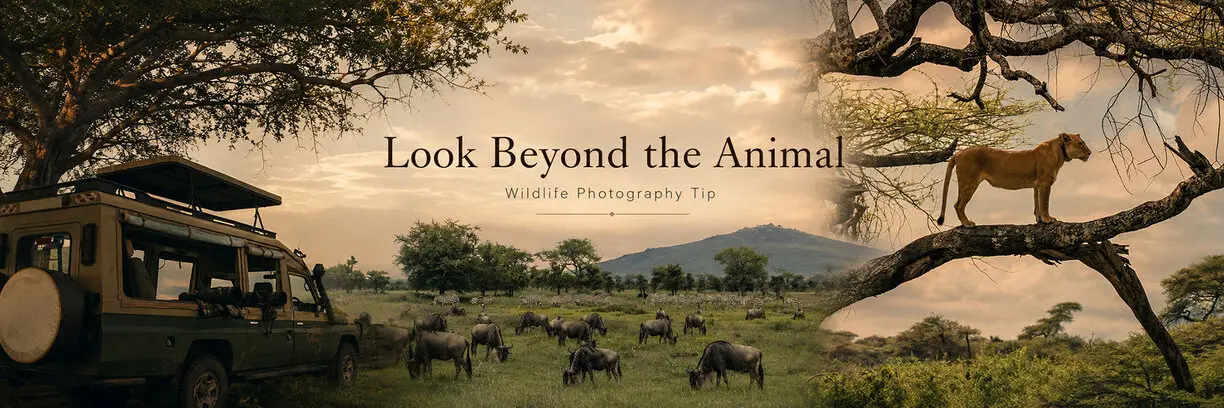
When we see a lion, elephant, leopard or colourful bird, our first instinct is simple:
Photograph it.
We focus on the animal, on the eyes, on sharpness and exposure.
But later, when we review the image, we sometimes realise that something is missing.
Very often, the problem is not the animal.
It is everything around it.
Photograph it.
We focus on the animal, on the eyes, on sharpness and exposure.
But later, when we review the image, we sometimes realise that something is missing.
Very often, the problem is not the animal.
It is everything around it.
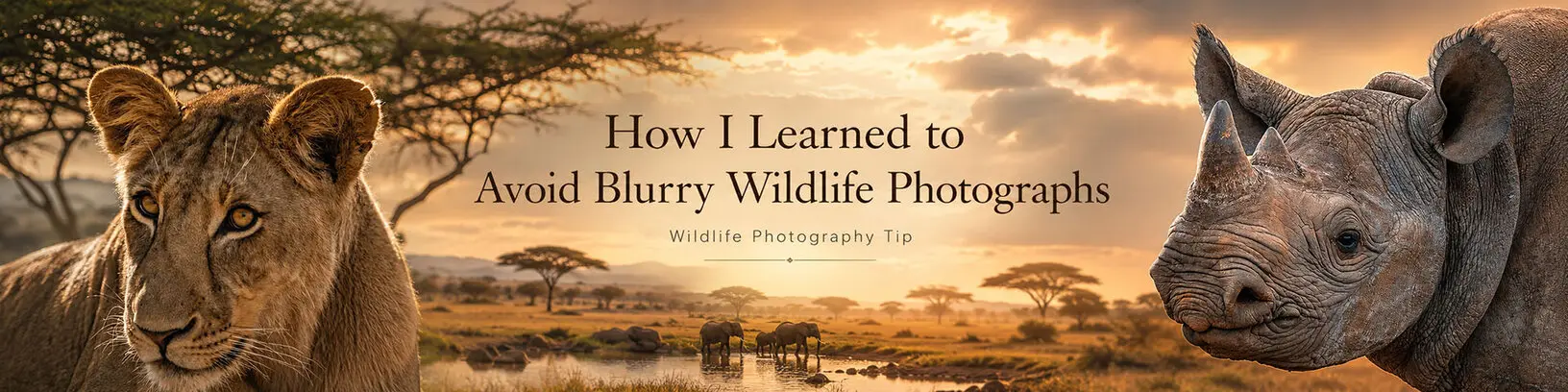
I have come back from more than one safari convinced that I had captured a strong image, only to discover later that it was not as sharp as it had looked on the camera screen.
It is frustrating.
The moment was there. The light was good. The animal was beautiful. But when I opened the file on a larger screen, the image looked soft.
It is frustrating.
The moment was there. The light was good. The animal was beautiful. But when I opened the file on a larger screen, the image looked soft.
Choosing where to go on safari in Tanzania is not always easy.
Many travellers know the famous names such as Serengeti and Ngorongoro, while others are attracted by the remote wilderness of Ruaha, Nyerere or Katavi. Birdwatchers may be interested in Lake Natron or Lake Manyara, while photographers often seek destinations that offer not only wildlife, but also beautiful landscapes, good light and fewer vehicles around sightings.
Many travellers know the famous names such as Serengeti and Ngorongoro, while others are attracted by the remote wilderness of Ruaha, Nyerere or Katavi. Birdwatchers may be interested in Lake Natron or Lake Manyara, while photographers often seek destinations that offer not only wildlife, but also beautiful landscapes, good light and fewer vehicles around sightings.
Over the years, my photographic journey across Africa has taken me through some of the continent’s most iconic and contrasting landscapes.
From the vast deserts of Namibia to the floodplains of Botswana, from the dramatic wildlife scenes of Zimbabwe to the classic savannahs of Kenya, Africa has shaped both my photographic eye and my understanding of what a true photographic safari should be.
From the vast deserts of Namibia to the floodplains of Botswana, from the dramatic wildlife scenes of Zimbabwe to the classic savannahs of Kenya, Africa has shaped both my photographic eye and my understanding of what a true photographic safari should be.